10 Small Things That Make Your Home Look More Expensive Than It Is

Making your home look more polished doesn’t have to mean buying expensive furniture or starting a major renovation.
Often, it’s the small details that change how a room feels — curtains hung a little higher, a rug that actually fits the space, fresh towels, simpler decor, or even a less cluttered kitchen counter.
Most of these changes can be made with things you already own or with a few inexpensive updates.
Here are 10 small changes that can make your home feel more pulled together — without making your budget disappear.
1. Hang Curtains Higher and Wider

Curtains can change the proportions of a room more than you might expect.
Instead of mounting the curtain rod directly above the window frame, hang it closer to the ceiling and extend it beyond both sides of the window. This draws the eye upward and can make the window — and the entire room — feel larger.
Let the curtain panels reach the floor rather than stopping short. When they’re open, most of the fabric should sit beside the window instead of covering the glass, allowing more natural light into the room.
You don’t need expensive custom drapes to get this effect. Simple, properly sized curtain panels can completely change how finished a room feels.
Hang curtains high, wide, and to the floor for a taller, more polished look.
2. Replace Cheap-Looking Cabinet Hardware
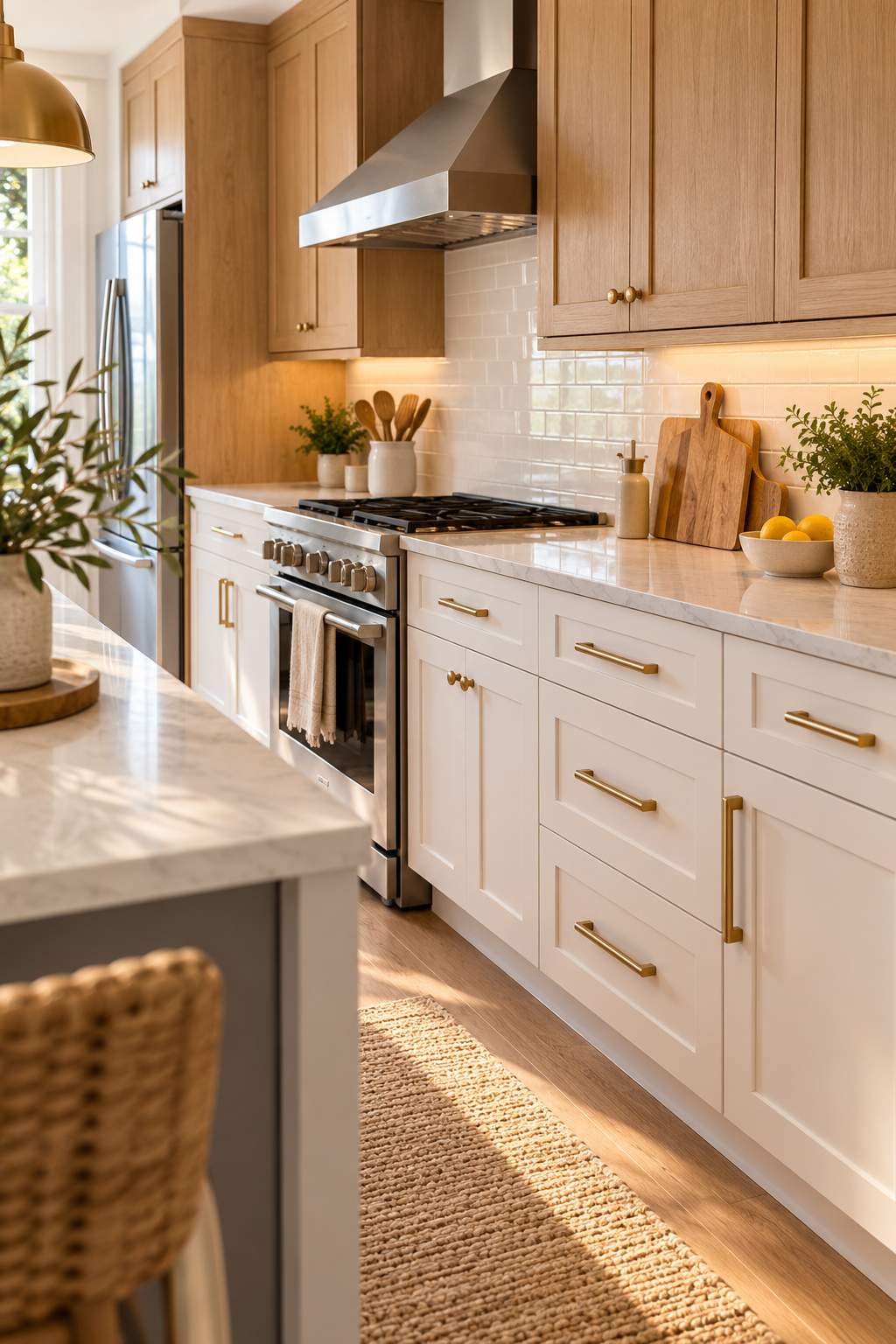
You don’t have to replace your kitchen cabinets to give them a more updated, polished look.
Sometimes simply changing the knobs and drawer pulls can make a surprisingly big difference. Older, mismatched, or basic hardware can make otherwise perfectly good cabinets feel dated.
Choose one simple finish and repeat it throughout the kitchen. In this kitchen, the warm metal hardware works with both the white lower cabinets and the natural wood cabinetry, helping the two finishes feel connected.
You also don’t need expensive designer hardware. Affordable knobs and pulls can create the same clean effect when the size, style, and finish are consistent.
Just make sure replacement pulls fit the existing screw holes whenever possible — it can save you extra drilling and patching.
Before replacing perfectly good cabinets, try changing the hardware — it’s one of the smallest updates that can make a kitchen feel noticeably newer.
3. Use a Larger Area Rug
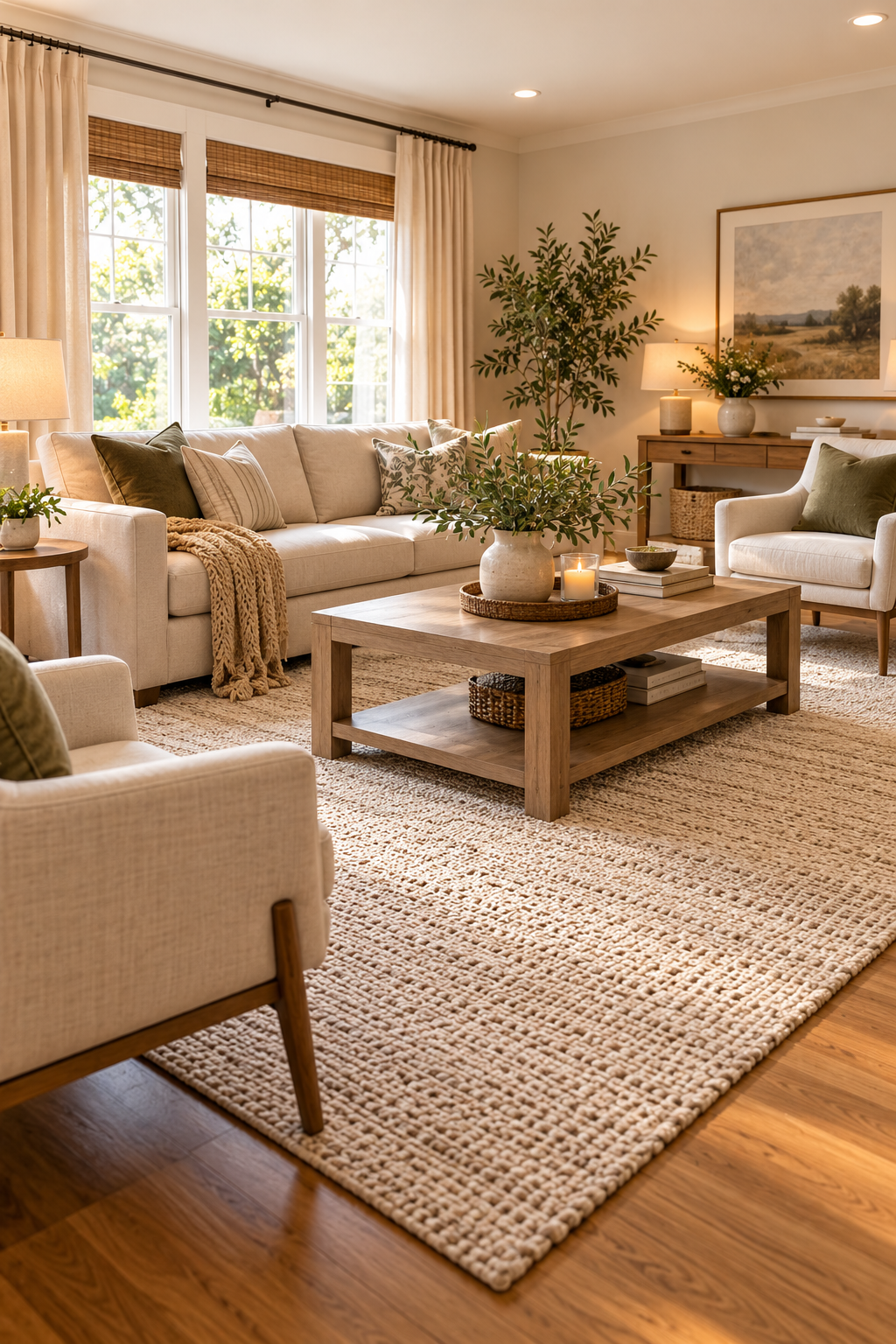
A rug that’s too small can make even a nicely furnished living room feel disconnected.
Instead of choosing a rug that fits only beneath the coffee table, go large enough to anchor the main pieces of furniture together. In this room, the rug extends beneath the seating area and reaches under the front legs of the sofa and chairs.
That simple change makes the furniture feel like one intentional arrangement rather than separate pieces floating around the room.
You don’t need an expensive rug to create the effect. Getting the proportions right often matters more than the price tag.
Before buying, measure your seating area and use painter’s tape on the floor to visualize different rug sizes. It’s much easier than discovering after delivery that the rug is too small.
A properly sized rug can make the entire room feel larger, more balanced, and more thoughtfully designed.
4. Upgrade Basic Bathroom Towels
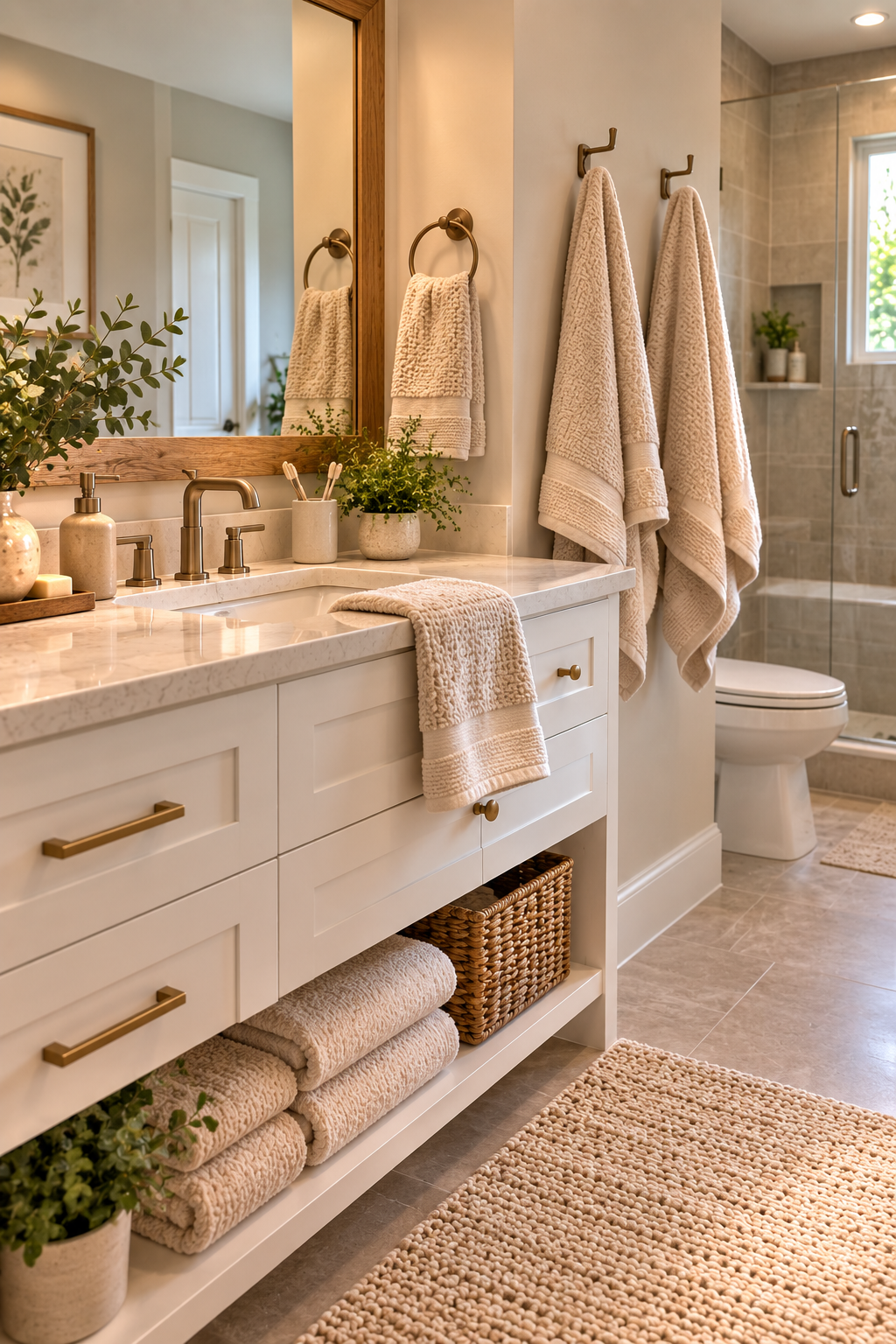
You don’t need to remodel your bathroom to make it feel more put together. Sometimes the simplest everyday items make the biggest visual difference.
Start with the towels. Replace a mix of faded, mismatched towels with a small coordinated set in one color family. Soft whites, creams, warm beige, or other muted shades are easy to mix with most bathrooms.
Choose bath towels that feel substantial and hang nicely, then add matching or coordinating hand towels near the sink. Fold the extras together on an open shelf or keep them neatly stored in a basket.
You don’t need a huge collection, either. A smaller set of towels you actually use can look much more intentional than shelves packed with different colors and patterns.
And there’s no need to throw away your older towels — move the worn ones to the cleaning closet, garage, or pet supplies if they still have life left in them.
Fresh, coordinated towels are a small change that can make an everyday bathroom feel instantly more polished.
5. Make the Bed Look Fuller
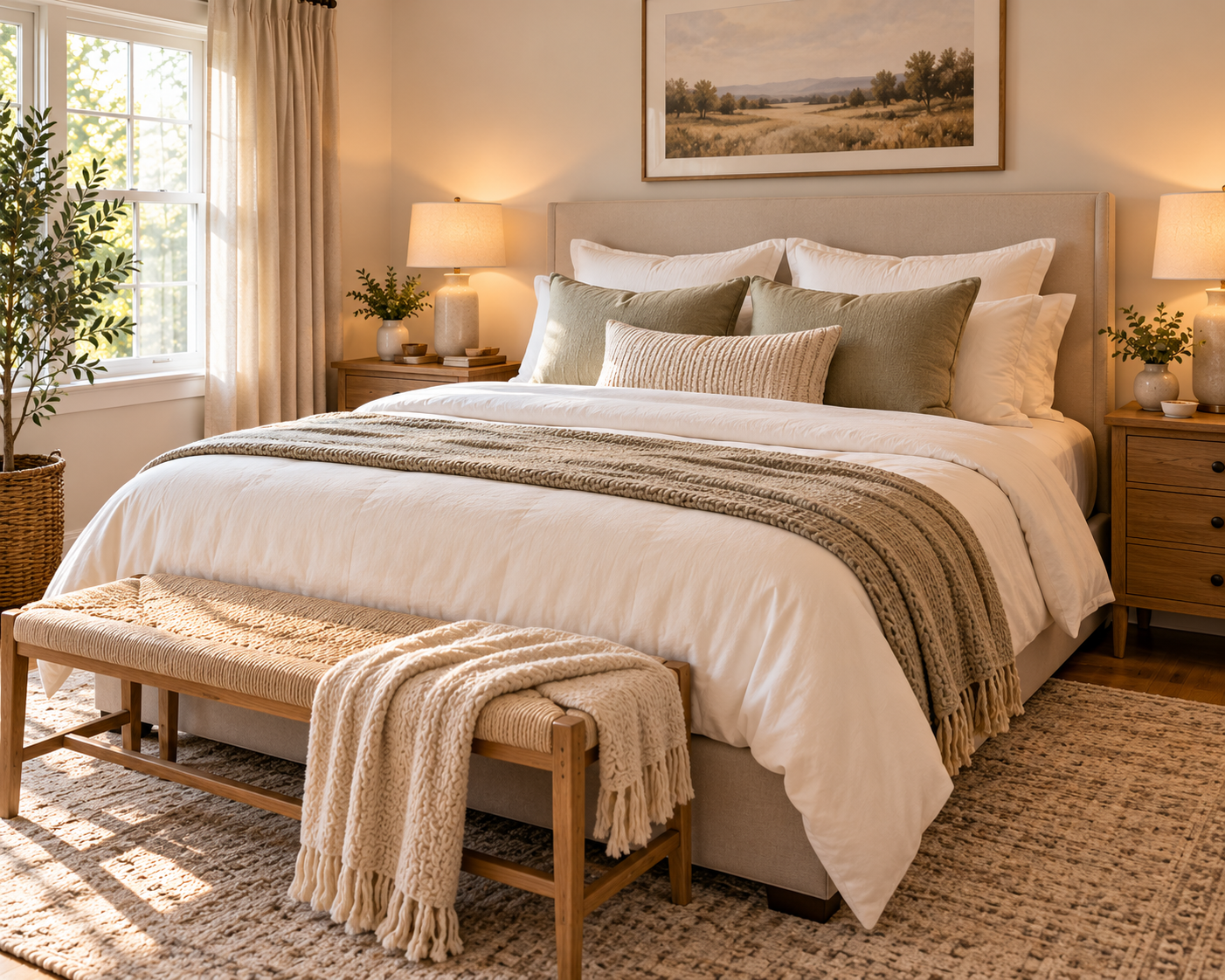
A beautifully styled bed doesn’t require expensive bedding or a mountain of decorative pillows.
The easiest trick is layering. Start with your regular sleeping pillows, add two larger pillows in front, and finish with one smaller accent pillow. That’s enough to give the bed more depth without turning bedtime into a pillow-removal project.
A fluffy duvet or comforter also makes a big difference. Instead of pulling everything completely flat, let the bedding keep some natural volume.
Then add a lightweight throw or blanket across the lower part of the bed. It introduces another texture and makes even simple white bedding feel more finished.
Notice that everything doesn’t have to match perfectly. The white bedding, soft green pillows, and textured neutral throw work together because the colors are calm and coordinated.
A few well-chosen layers can make an everyday bed feel fuller, softer, and much more polished.
6. Hide Everyday Clutter in Matching Baskets
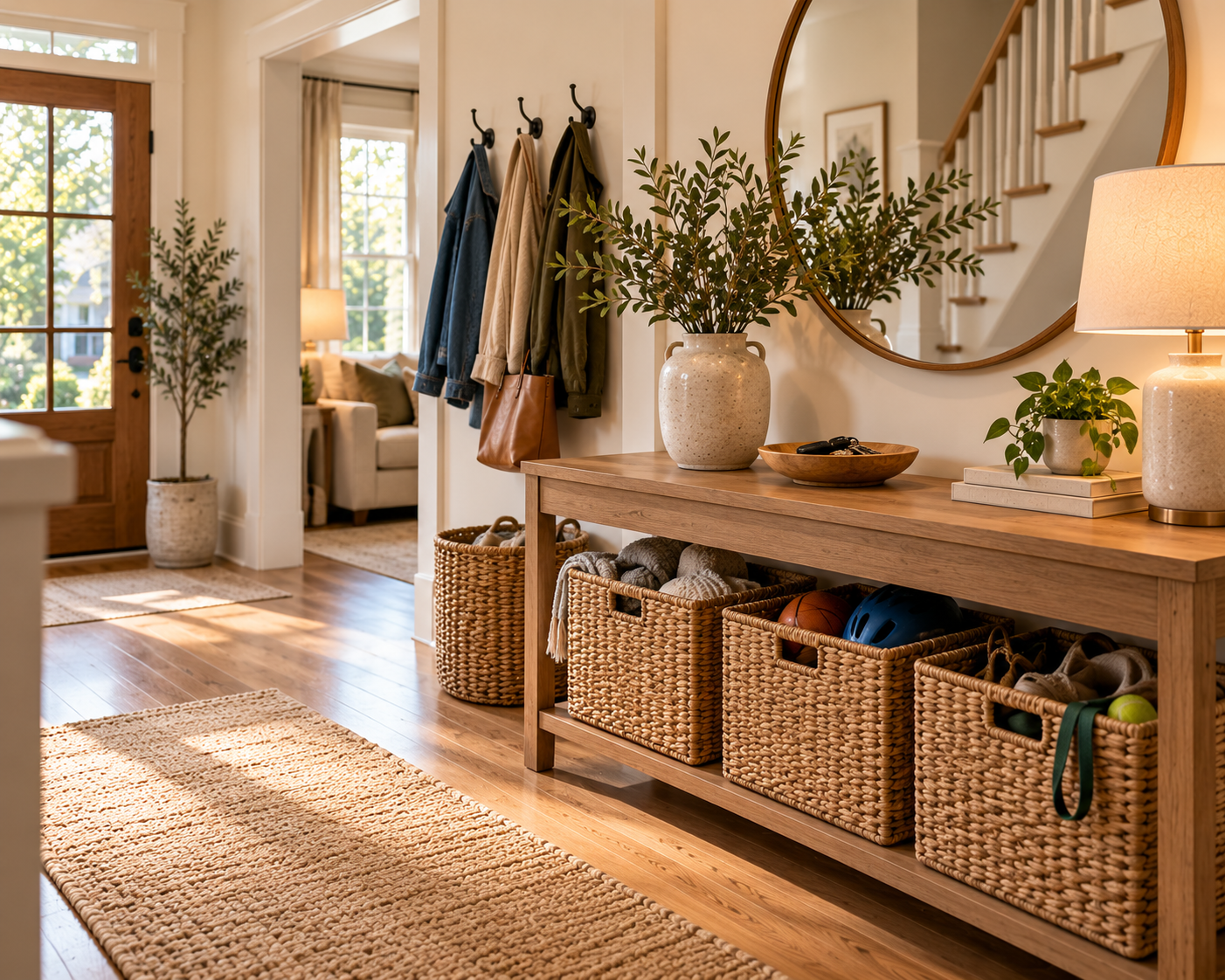
Entryways collect clutter faster than almost any other part of the house. Shoes, bags, sports gear, scarves, and all the little things your family drops when they walk through the door can quickly make the space feel messy.
Instead of trying to hide everything in a closet, give those everyday items simple designated baskets.
In this entryway, matching woven baskets hold everything from shoes and soft accessories to sports gear. The items are still easy to grab, but the matching containers make the entire area feel much calmer and more intentional.
You don’t need a basket for every single item. A few generously sized ones are usually more practical than lots of tiny containers.
And they don’t have to be expensive. The important part is choosing similar baskets that fit the space and are large enough for the things your family actually leaves near the door.
When everyday clutter has a place to land, your entryway can look organized without pretending nobody actually lives there.
7. Use Fewer, Larger Decor Pieces
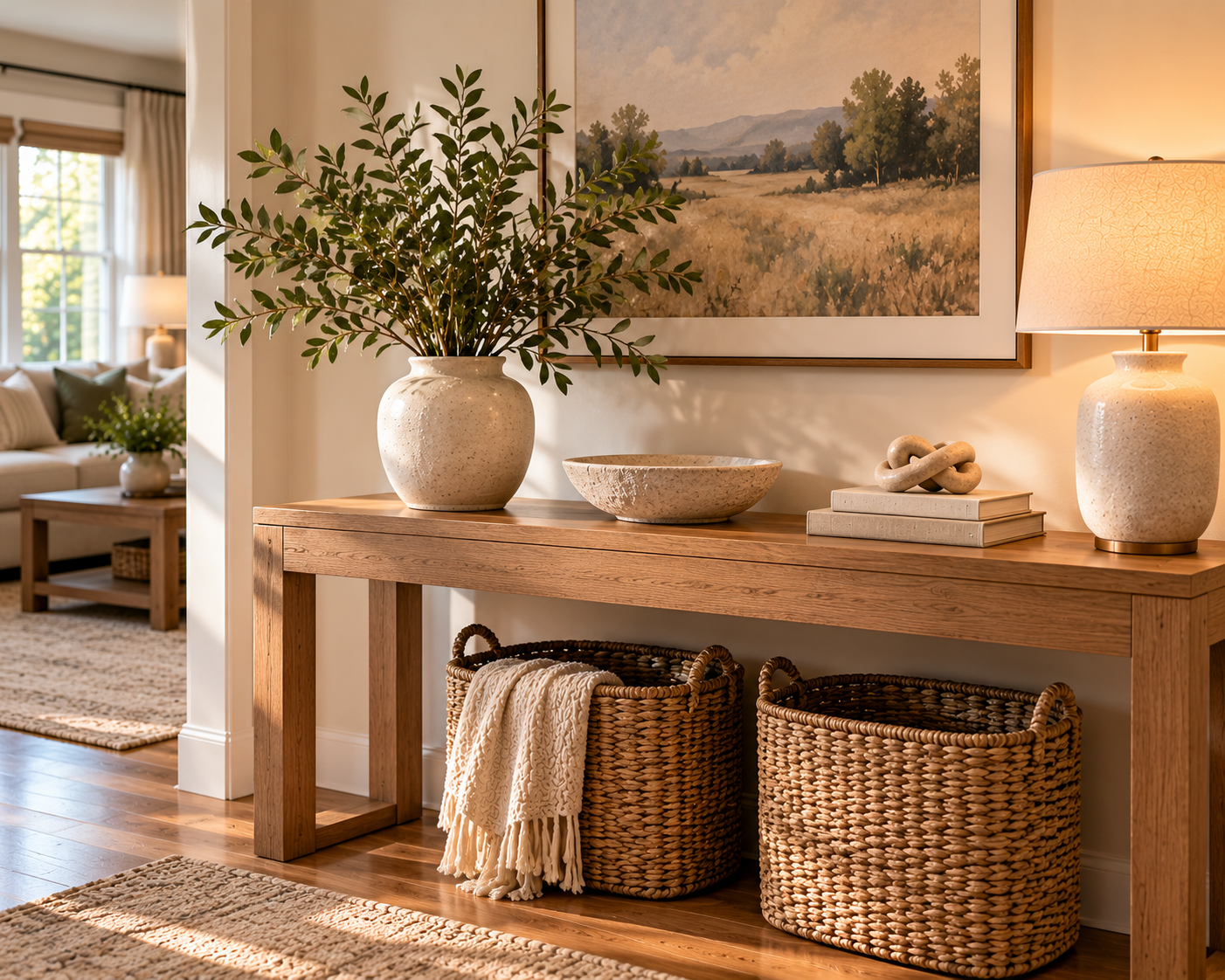
When a table, shelf, or console is covered with lots of tiny decorations, even beautiful pieces can start to look like clutter.
Try the opposite approach: use fewer pieces, but give them a little more visual presence.
On this console, one substantial vase with branches, a simple bowl, a small stack of books, and a sculptural object are enough. There’s still plenty of empty surface around them, which allows each piece to stand out.
You can use things you already own. Try removing everything from a surface first, then put back only a few favorites in different heights and textures.
The goal isn’t to make your home look empty. It’s simply to give the things you love enough room to be noticed.
A few well-chosen pieces often look more intentional — and more expensive — than a surface filled with small decorations.
8. Replace Plastic Soap Bottles With Simple Dispensers

The area around the kitchen sink is small, but it’s one of the places you look at every single day.
Instead of leaving colorful disposable soap bottles on the counter, pour your hand soap and dish soap into simple refillable dispensers.
Here, two matching ceramic dispensers sit together on a small wooden tray with a dish brush. It keeps the everyday essentials within reach while making the sink area feel much more intentional.
You don’t need an elaborate sink organizer or expensive accessories. Two inexpensive dispensers and a small tray are enough.
Just choose containers that are easy to refill and clean — this should make everyday life simpler, not create another decorating chore.
When the things you use every day look coordinated, even the kitchen sink can feel more polished.
9. Add One Oversized Piece of Wall Art

A large empty wall doesn’t always need a gallery of frames to feel finished.
Sometimes one generously sized piece of art is enough to give the entire space a stronger, more intentional look.
Here, the large landscape fills the wall above a simple wooden bench without overwhelming it. Because there aren’t lots of smaller frames competing for attention, the artwork becomes a clear focal point and the hallway feels calmer.
The artwork itself doesn’t have to be expensive. Look for large prints, downloadable artwork you can have printed locally, thrifted pieces, or even artwork you already own that could benefit from a larger frame.
Before hanging it, pay attention to scale. A tiny picture centered on a wide wall can easily look lost.
One well-proportioned piece of art can have more impact than an entire collection of small decorations.
10. Style the Kitchen Counter Instead of Filling It

A kitchen can have beautiful cabinets and countertops and still feel cluttered when every inch of the counter is covered.
Start by removing the things that don’t need to live there permanently. Then bring back the items your family actually uses every day.
In this kitchen, the coffee maker stays within easy reach, while a cutting board, everyday utensils, and a bowl of fruit are grouped together instead of being scattered across the counter. Most of the work surface remains open.
You can do the same on an island. One simple grouping — like a vase and a bowl — is often enough. You don’t need to decorate every empty spot.
And don’t feel pressured to hide everything. A kitchen still needs to function. The goal is simply to create some breathing room around the things you use.
Leaving part of your countertop empty may be the easiest decorating trick of all — and it doesn’t cost a thing.
Small Changes Make the Biggest Difference
A home doesn’t have to be expensive to look beautiful and thoughtfully put together.
Start with one room and look at what you can simplify, rearrange, or update before buying something new. Sometimes moving a curtain rod, removing a few decorations, or clearing part of a countertop makes more difference than another shopping trip.
Most importantly, keep your home comfortable and practical for the people who actually live there.
The goal isn’t to make your home look expensive — it’s to make what you already have look its best.